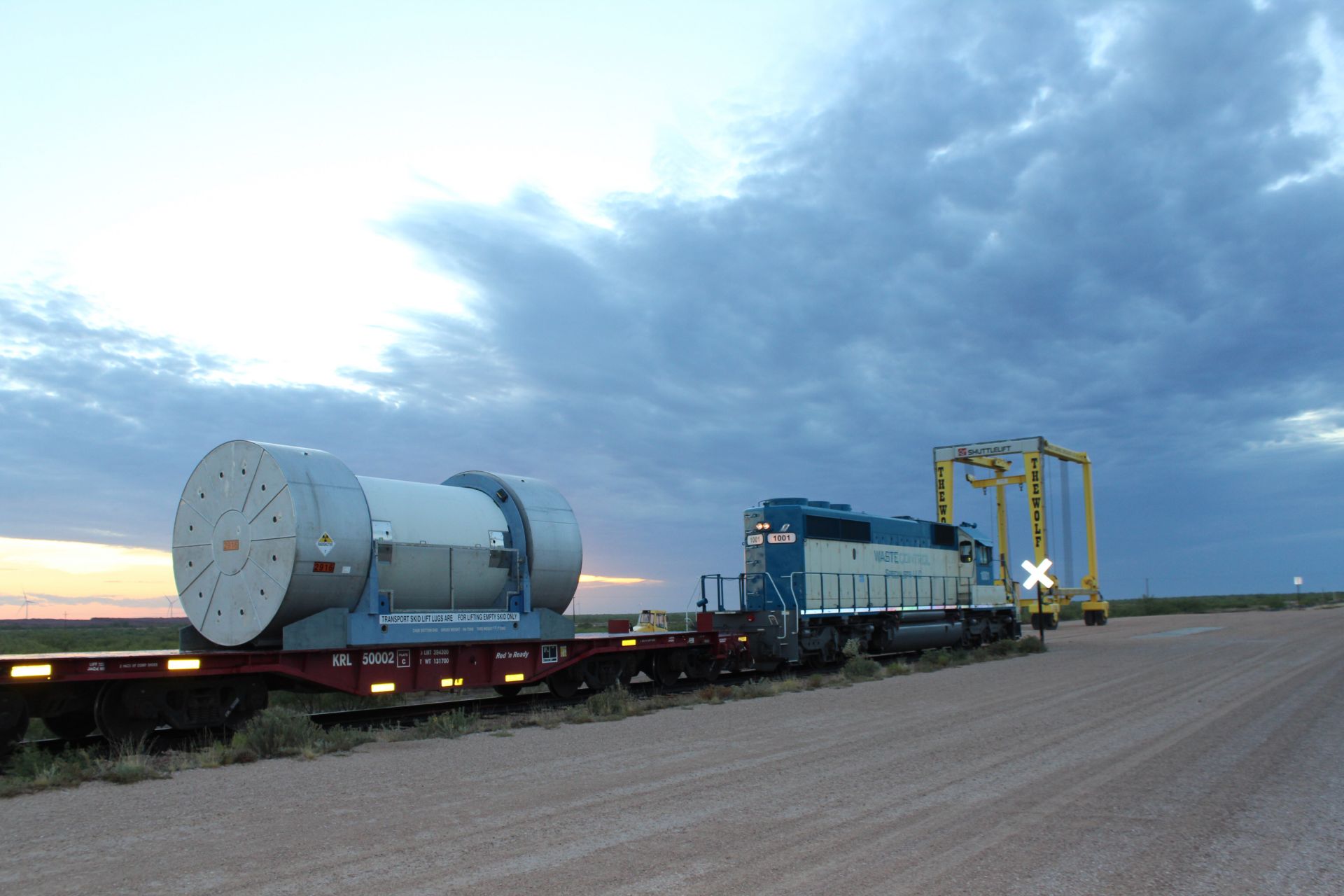
April 7, 2026, 9:27AMRadwaste SolutionsSven Bader, Brad Crotts, Michael Smith, Don McGee, and John McEntire An Orano MP197HB transport cask loaded onto a railcar.
With the significant advances in additive manufacturing (AM), otherwise known as 3D printing, Orano Federal Services and the University of North Carolina at Charlotte recently re-examined the capabilities to print impact limiters for transportation casks used to ship spent nuclear fuel. Impact limiters protect transportation casks (sometimes also referred to as transportation overpacks) and their contents during an accident. Impact limiter designs must withstand testing based on a certain significance level of hypothetical accidents, including drops, crushing, fires, and immersion in water.
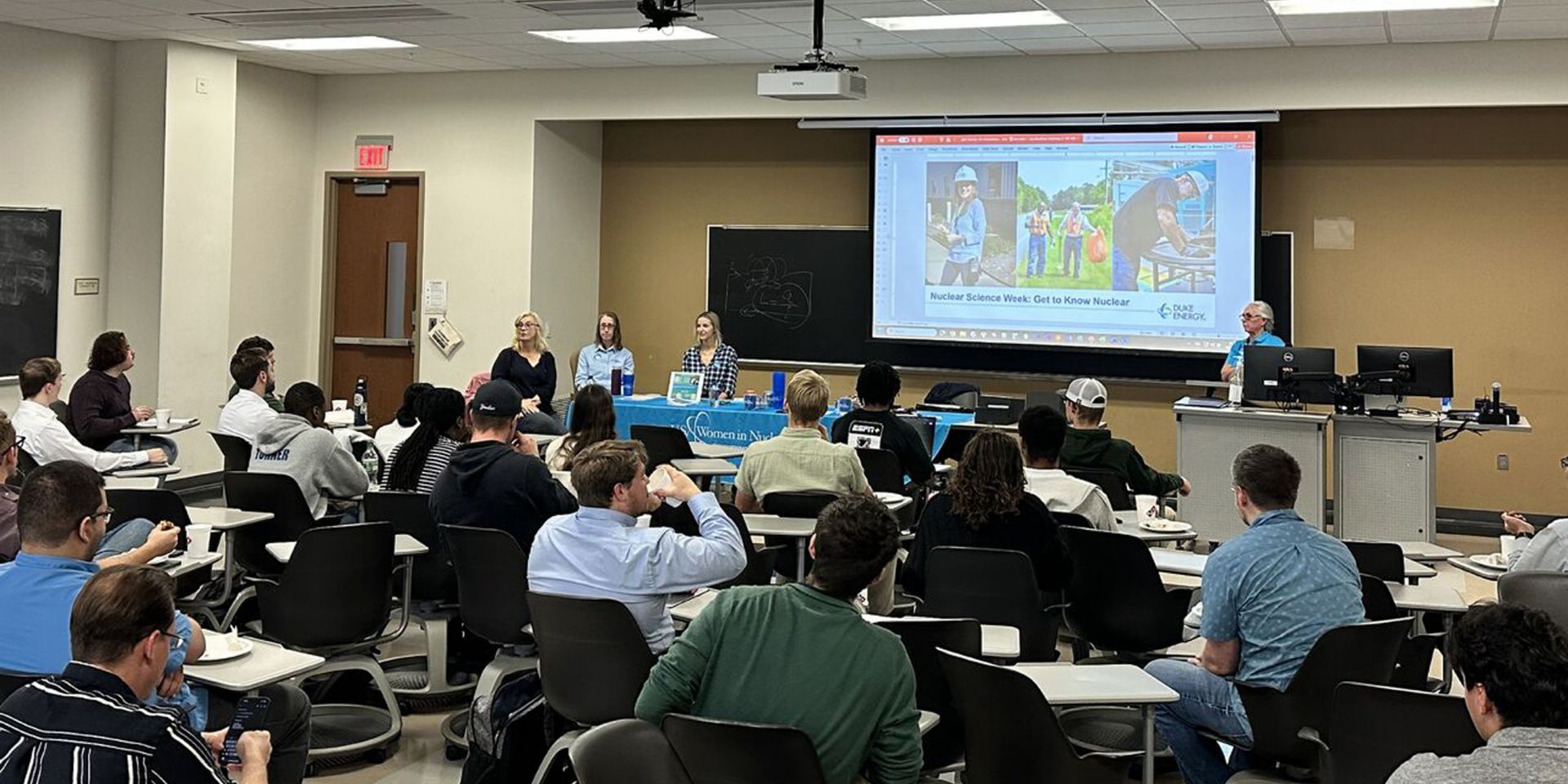
Women in Nuclear representatives give a presentation at UNC Charlotte during an event sponsored by Duke Energy as part of Nuclear Science Week in October 2025. (Photo: UNC Charlotte)
The nuclear industry has long recognized a shortage of both skilled craft labor and professional talent. As global demand for reliable energy continues to rise—across the United States and internationally—that need has not only increased but has become critical.” This is a truth that nuclear industry consultant Jeffery P. Hawkins understands, and it is why he developed a program called Interns to Industry. The former Fluor Corporation executive said that “there has been a deficit of qualified resources in the nuclear industry, and this is forecasted to be even more so in the future, so I am working with various universities to determine how to customize their curriculums to fit the forecasted needs of the industry.”